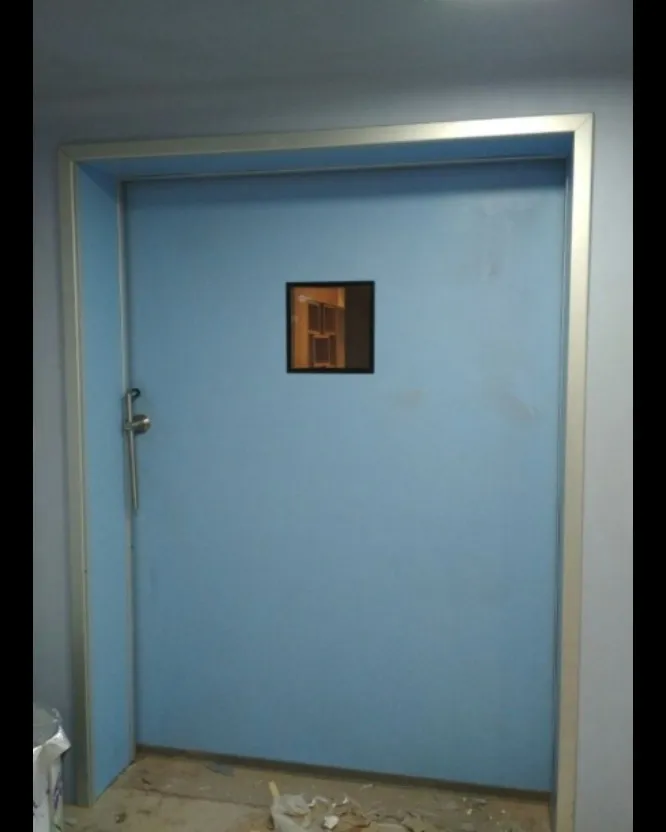
A Hermetically Sealed Door is commonly considered for operating theatres and other controlled healthcare environments where air leakage, hygiene, accessibility, and smooth operation need careful management. Although it may appear to be a relatively small component of a hospital project, the door can influence room pressure performance and everyday staff movement.
Hospitals and healthcare developers in Greater Noida, Uttar Pradesh, should evaluate several technical and practical factors before selecting a door system.
Start With the Application
Not every hospital doorway requires the same specification. Determine whether the door will serve an operation theatre, sterile area, laboratory, isolation environment, or another controlled space.
The intended application affects dimensions, sealing requirements, operating method, and accessories.
Check the Sealing Mechanism
A hermetically sealed design is intended to reduce unwanted air leakage when the door is closed. Buyers should understand how the selected system achieves sealing around the perimeter.
The door frame, panel, gasket arrangement, installation accuracy, and surrounding wall construction all contribute to final performance.
Manual or Automatic Operation
Automatic doors can support convenient movement where staff frequently transport patients, equipment, or trolleys.
Depending on the system, activation options may include touchless sensors, elbow switches, foot switches, or other controls.
The operating mechanism should be selected around workflow, hygiene requirements, safety, and maintenance capability.
Consider Safety Features
For automatic systems, ask about appropriate obstacle detection and safe operation. Staff should also understand how the door behaves during a power interruption or emergency condition.
Select Suitable Surface Materials
Hospital doors are exposed to frequent cleaning and physical contact. Surface materials should therefore be durable, cleanable, and compatible with the surrounding modular wall system.
Vision panels may also be considered where clinically appropriate.
Do Not Ignore Service Support
Motors, sensors, controls, tracks, seals, and moving components can require periodic attention. Hospitals should ask how these parts can be accessed and what routine maintenance is recommended.
Modular Healthcare System is one option for Greater Noida projects sourcing modular healthcare components as part of coordinated OT or controlled-room infrastructure.
Before placing an order, confirm opening dimensions, wall construction, clear passage width, door direction, automation method, access-control requirements, electrical provisions, sealing expectations, and finish.
Choosing a Hermetically Sealed Door through a specification-based process helps ensure that the product fits the room's functional requirements instead of becoming an isolated architectural element.
Keywords