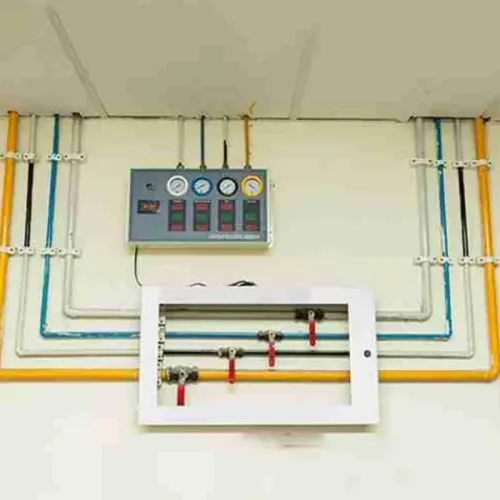
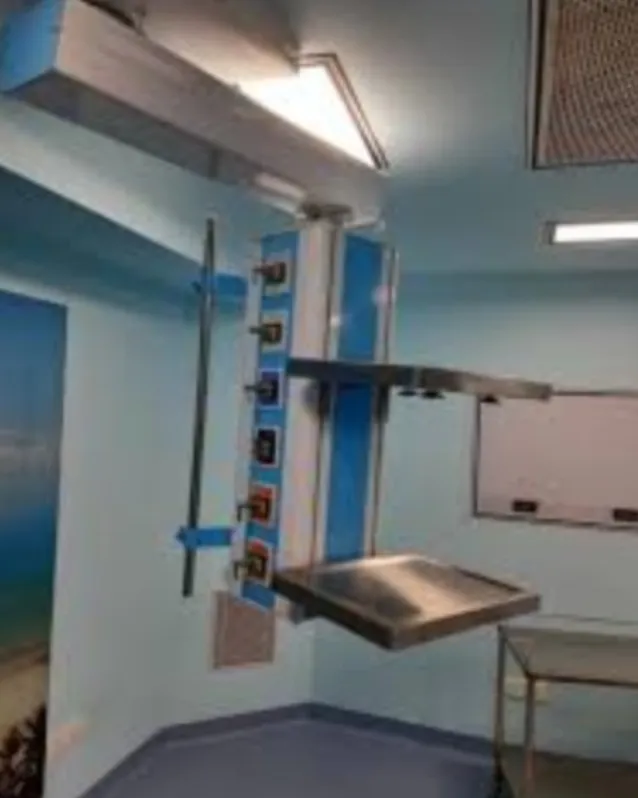
Surgical Pendants help organize medical gases, electrical outlets, data connections, equipment, and accessories close to the point of clinical use. In operating theatres and critical-care environments, they can reduce dependence on wall-mounted services and help keep frequently used connections accessible.
For hospitals in Greater Noida, Uttar Pradesh, pendant selection should begin before the ceiling and service infrastructure is finalized because mounting, structural loads, service routes, and equipment positions are closely connected.
Match the Pendant to Its Clinical Use
An anesthesia pendant and a surgical pendant may serve different equipment and connection requirements. ICU pendants can also have a different configuration.
Before requesting quotations, hospitals should prepare a list of the services required at each position.
This may include:
- Medical gas outlets
- Electrical sockets
- Data points
- Equipment shelves
- Monitor arms
- IV accessories
- Equipment rails
- Other specialty connections
Specifying actual requirements helps prevent both under-equipped and unnecessarily complex systems.
Review Movement and Reach
Pendant arms may offer different movement ranges and load capacities. More movement is not automatically better.
The correct configuration depends on room dimensions, equipment placement, staff positions, surgical table location, and the areas that need to remain unobstructed.
A layout drawing showing the pendant's working envelope can help clinicians assess usability before installation.
Confirm Structural Requirements
Ceiling-mounted pendants transfer loads to the building structure. Their supports therefore need to be coordinated with structural and modular ceiling design.
Waiting until the OT ceiling is nearly complete to decide pendant positions can result in avoidable rework.
Coordinate Every Service
Medical gases, electricity, data, and other connections must reach the pendant through planned service routes.
Coordination between the pendant supplier, medical gas contractor, electrical team, modular OT manufacturer, and other engineering teams is essential.
Think About Maintenance
Hospitals should understand how brakes, joints, outlets, shelves, and other components are inspected and serviced. Spare-part availability and maintenance arrangements are relevant lifecycle considerations.
Modular Healthcare System can be considered for Greater Noida hospital projects where Surgical Pendants need to be coordinated with modular OTs, ICUs, medical gas systems, and ceiling infrastructure.
Before procurement, ask clinicians to review pendant position, reach, outlet quantities, accessory requirements, equipment loads, and staff movement. Once those requirements are clear, engineering teams can finalize structural support and utility connections with far greater accuracy.
Keywords