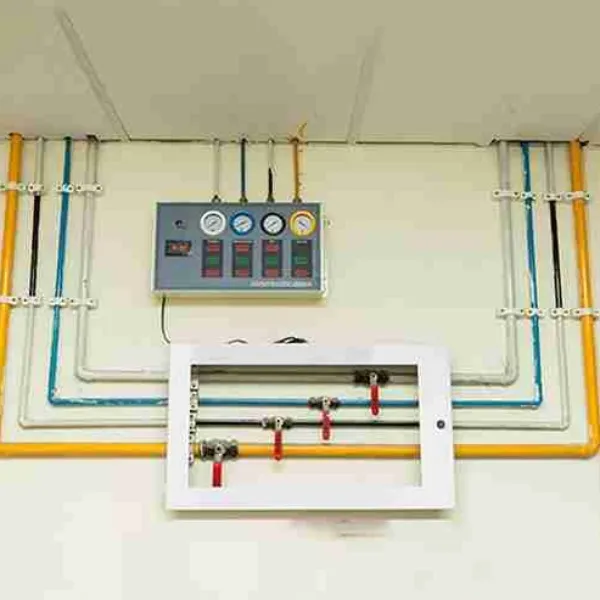
A Medical Gas Pipeline System provides centralized distribution of gases and vacuum services to clinical areas where they are required. Because these services may support operating theatres, ICUs, emergency departments, recovery areas, wards, and other patient-care spaces, errors made during planning can affect both usability and future maintenance.
Hospitals and healthcare developers in Greater Noida should address medical gas requirements early instead of treating the system as a final-stage installation.
Mistake 1: Planning Outlets Without Clinical Input
An outlet may appear correctly positioned on a drawing but become difficult to access after beds, pendants, monitors, or equipment are installed.
Clinical users and biomedical teams should review outlet quantities and positions before finalization.
Mistake 2: Ignoring Future Demand
Hospitals can change significantly after commissioning. Critical-care beds may increase, departments may be reconfigured, or new equipment may be introduced.
Pipeline sizing and infrastructure planning should therefore consider reasonable future requirements rather than only immediate demand.
Mistake 3: Poor Coordination With Other Services
Medical gas pipelines often share ceiling and service zones with HVAC ducts, electrical trays, plumbing, fire protection, and communication infrastructure.
Late coordination can create clashes and difficult maintenance access.
Mistake 4: Overlooking Alarm and Monitoring Locations
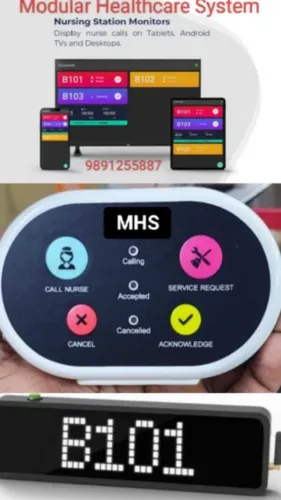
Alarm systems need to provide useful information to responsible staff. Their locations should be selected according to the hospital's operational and engineering requirements.
Mistake 5: Making Maintenance Difficult
Valves, manifolds, alarms, pipeline sections, and related components require inspection and servicing. They should not become inaccessible behind permanent finishes or crowded service zones.
Clear identification of pipelines and relevant components can also simplify maintenance activities.
Mistake 6: Treating Testing as a Formality
Installation completion should be followed by the required testing, verification, documentation, and commissioning procedures. The hospital should retain appropriate records for future maintenance and modifications.
Think Beyond the Pipeline
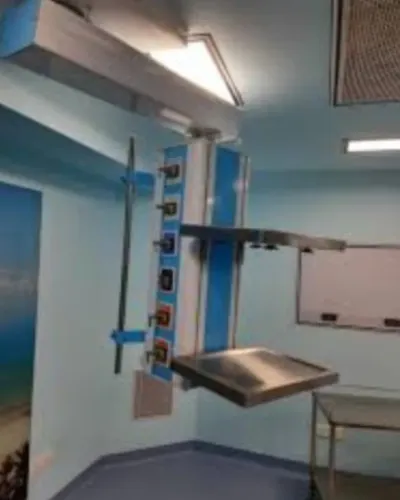
A medical gas system includes more than pipes. Depending on project scope, it can involve source equipment, manifolds, valves, alarm systems, terminal units, controls, and associated safety provisions.
Modular Healthcare System works with healthcare infrastructure projects where medical gas services may need to be coordinated with modular OTs, ICUs, and other specialized clinical areas.
For Greater Noida hospitals, the strongest approach is to coordinate the Medical Gas Pipeline System with architectural, mechanical, electrical, biomedical, and clinical planning from the beginning. Doing so can reduce installation conflicts and create a system that is easier to operate, inspect, maintain, and expand.
Keywords